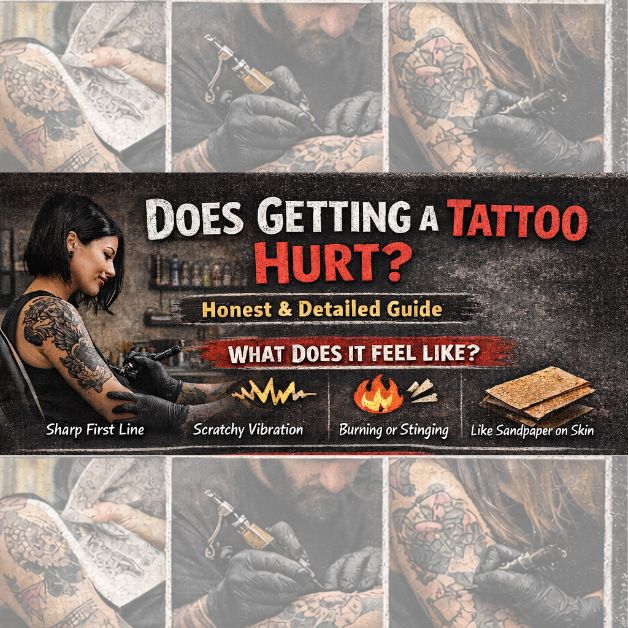
Does Getting a Tattoo Hurt?
It’s completely normal to feel nervous before your first tattoo. Fear of the unknown often feels bigger than reality. This guide gives you a fully transparent, detailed explanation of tattoo pain level, the tattoo pain chart by body area, the most painful tattoo spots, the least painful places for tattoos, and how to reduce tattoo pain effectively.
If you’re searching for honest answers — this is it.
Does Getting a Tattoo Hurt? The Complete Honest Answer
Yes — getting a tattoo involves discomfort. But it’s rarely the unbearable pain people imagine.
A tattoo machine works by moving needles in and out of the skin at high speed (around 50–3,000 times per minute). The needle deposits ink into the dermis layer of your skin. Because your body recognizes this as controlled trauma, you feel sensation.
However, when people ask, Does Getting a Tattoo Hurt, what they really want to know is:
- Will I be able to handle it?
- Is it sharp pain or dull pain?
- Will I regret starting it?
Here’s what it actually feels like:
The Sensation Breakdown
1. First Contact:
The very first line feels sharp and surprising. Your brain reacts more to the shock than the pain itself.
2. Continuous Lining:
Feels like a steady scratching or hot dragging sensation.
3. Shading:
More like someone rubbing sandpaper repeatedly on your skin.
4. Color Packing:
This can feel more intense because the needle passes over the same area multiple times.
The discomfort is constant but manageable for most people. Your body releases endorphins (natural painkillers), which help you adjust within the first 10–15 minutes.
So again — Does Getting a Tattoo Hurt? Yes. But for most clients, it’s absolutely tolerable.
Tattoo Pain Chart: Least to Most Painful Areas
Understanding the tattoo pain chart helps you choose placement wisely — especially for your first piece.
Least Painful Places for Tattoos
These areas have thicker skin, more muscle, and fewer nerve endings.
1. Outer Upper Arm
- Soft muscle padding
- Ideal for medium to large designs
- Pain Level: Low
Many first-timers start here because it offers balanced visibility and comfort.
2. Forearm
- Even surface
- Moderate muscle
- Pain Level: Low to Moderate
You’ll feel vibration, but it’s usually very manageable.
3. Thigh
- Thick skin and muscle
- Excellent for large tattoos
- Pain Level: Low
A top recommendation if you’re concerned about whether Does Getting a Tattoo Hurt too much.
4. Calf
- Muscle-heavy area
- Pain Level: Low to Moderate
Some sensitivity near the shin, but overall beginner-friendly.
5. Upper Back & Shoulder Blade
- Broad canvas
- Pain Level: Low to Moderate
Good for detailed designs with less intense discomfort.
Moderately Painful Areas
These areas have moderate nerve concentration or thinner skin.
- Wrist
- Lower leg
- Outer chest
- Ankle
- Back of shoulder
Pain Level: Moderate
You may feel sharper sensations, especially near bone.
Most Painful Tattoo Spots
These areas rank highest on the tattoo pain chart due to thin skin, bone proximity, and dense nerve endings.
1. Ribs
- Minimal fat
- Constant movement from breathing
- Pain Level: High
Often described as deep, vibrating, and intense.
2. Spine
- Bone directly under skin
- Pain Level: High
The vibration travels along your back.
3. Collarbone
- Very little cushioning
- Pain Level: High
Sharp and piercing sensation.
4. Elbows & Knees
- Skin directly over bone
- Pain Level: High
The buzzing vibration amplifies discomfort.
5. Feet & Hands
- Thin skin
- High nerve density
- Pain Level: Very High
These are among the most painful tattoo spots for most clients.
Factors That Affect Tattoo Pain
Two people can get the same tattoo in the same spot and have completely different experiences. Here’s why:
1. Tattoo Placement
As shown in the tattoo pain chart, areas closer to bone hurt more. Fat and muscle reduce vibration and cushion the needle impact.
2. Size and Duration
The longer the session, the more irritated your skin becomes. Fatigue lowers your pain tolerance.
A 30-minute tattoo feels very different from a 4-hour session.
3. Your Tattoo Pain Tolerance
Tattoo pain tolerance varies due to:
- Genetics
- Stress levels
- Hormonal cycles
- Sleep quality
- Mental state
Anxious clients often perceive higher pain levels.
4. Artist Technique
An experienced artist:
- Works smoothly
- Avoids overworking the skin
- Maintains consistent pressure
Poor technique increases trauma and discomfort.
(Internal link suggestion: Read our blog on How to Choose the Right Tattoo Artist.)
5. Physical Preparation
Pain increases if you:
- Skip meals
- Drink alcohol
- Are dehydrated
- Are sleep-deprived
Your body handles stress better when properly prepared.
How to Reduce Tattoo Pain (Proven Methods)
If you’re worried about whether Does Getting a Tattoo Hurt too much, these strategies help significantly.
Before the Appointment
✔ Get 7–8 hours of sleep
✔ Eat a protein-rich meal
✔ Stay hydrated
✔ Avoid alcohol (24 hours prior)
✔ Avoid caffeine if you’re anxious
A stable blood sugar level improves tattoo pain tolerance.
During the Session
1. Controlled Breathing
Slow inhale through the nose, slow exhale through the mouth. It calms your nervous system.
2. Distraction
- Music
- Podcast
- Watching a show
- Talking to your artist
3. Take Breaks
Short pauses reduce mental fatigue and allow skin to relax.
Numbing Creams: Detailed Insight
Some clients use topical anesthetics. However:
- They may alter skin texture
- Effects can wear off mid-session
- Not all artists allow them
Always consult your artist before applying anything.
What First-Timers Should Expect (Step-by-Step Experience)
Understanding the process reduces fear.
Step 1: Consultation & Design
You discuss placement, size, and design. No pain involved — just planning.
(Internal link suggestion: Explore our blog on Popular Tattoo Styles for First-Timers.)
Step 2: Stencil Application
The stencil is placed to show placement. This helps confirm positioning before tattooing begins.
Step 3: The First Line
This is the moment you discover the real answer to Does Getting a Tattoo Hurt.
It stings briefly. Most clients say, “Oh, that’s not as bad as I thought.”
Step 4: Settling In
After 10–15 minutes:
- Your body releases endorphins
- You adapt to the sensation
- The pain feels more predictable
Many describe entering a calm focus state.
Step 5: Final Phase
Toward the end:
- Skin becomes tender
- Sensitivity increases
- Shading may feel more intense
But by then, you’re mentally prepared.
After the Tattoo: Healing Sensation
Pain doesn’t end immediately.
For 2–3 days, expect:
- Redness
- Warmth
- Mild swelling
- Sunburn-like soreness
Proper care reduces discomfort.
(Internal link suggestion: Read our complete Tattoo Aftercare Guide.)
Frequently Asked Questions (FAQ)
Q1: Does Getting a Tattoo Hurt More Than a Piercing?
Tattoo pain is continuous and spread out, while piercing pain is quick and sharp. Most people find tattoos more tolerable over time.
Q2: What Is the Most Painful Tattoo Spot?
Ribs, spine, collarbone, feet, and armpits are considered the most painful tattoo spots.
Q3: What Are the Least Painful Places for Tattoos?
Outer arm, forearm, thigh, and calf are the least painful places for tattoos.
Q4: Can I Increase My Tattoo Pain Tolerance?
Yes. Sleep well, eat properly, stay hydrated, and manage anxiety.
Q5: Does Tattoo Pain Get Worse as You Age?
Pain perception can increase slightly with thinner skin, but individual tolerance varies.
Q6: How Long Does Tattoo Pain Last Afterward?
Initial soreness lasts 2–3 days. Full healing takes 2–4 weeks.
Final Thoughts: Is It Worth It?
The biggest fear isn’t the needle — it’s the uncertainty.
When people repeatedly ask, Does Getting a Tattoo Hurt, what they truly fear is losing control.
But here’s the truth:
- The discomfort is temporary.
- The art is permanent.
- The experience builds confidence.
Almost every first-timer says the same thing afterward:
“I was more scared than I needed to be.”
Ready to Take the First Step?
If you’ve been searching “Does Getting a Tattoo Hurt” for weeks, this is your sign to move forward.
Our studio offers:
✔ First-time friendly consultations
✔ Professional, hygienic environment
✔ Experienced artists
✔ Guided placement advice based on tattoo pain chart
✔ Personalized designs
Your tattoo journey doesn’t start with pain.
It starts with courage.
👉 Book your consultation today and turn your idea into lasting art.
Leave a Reply