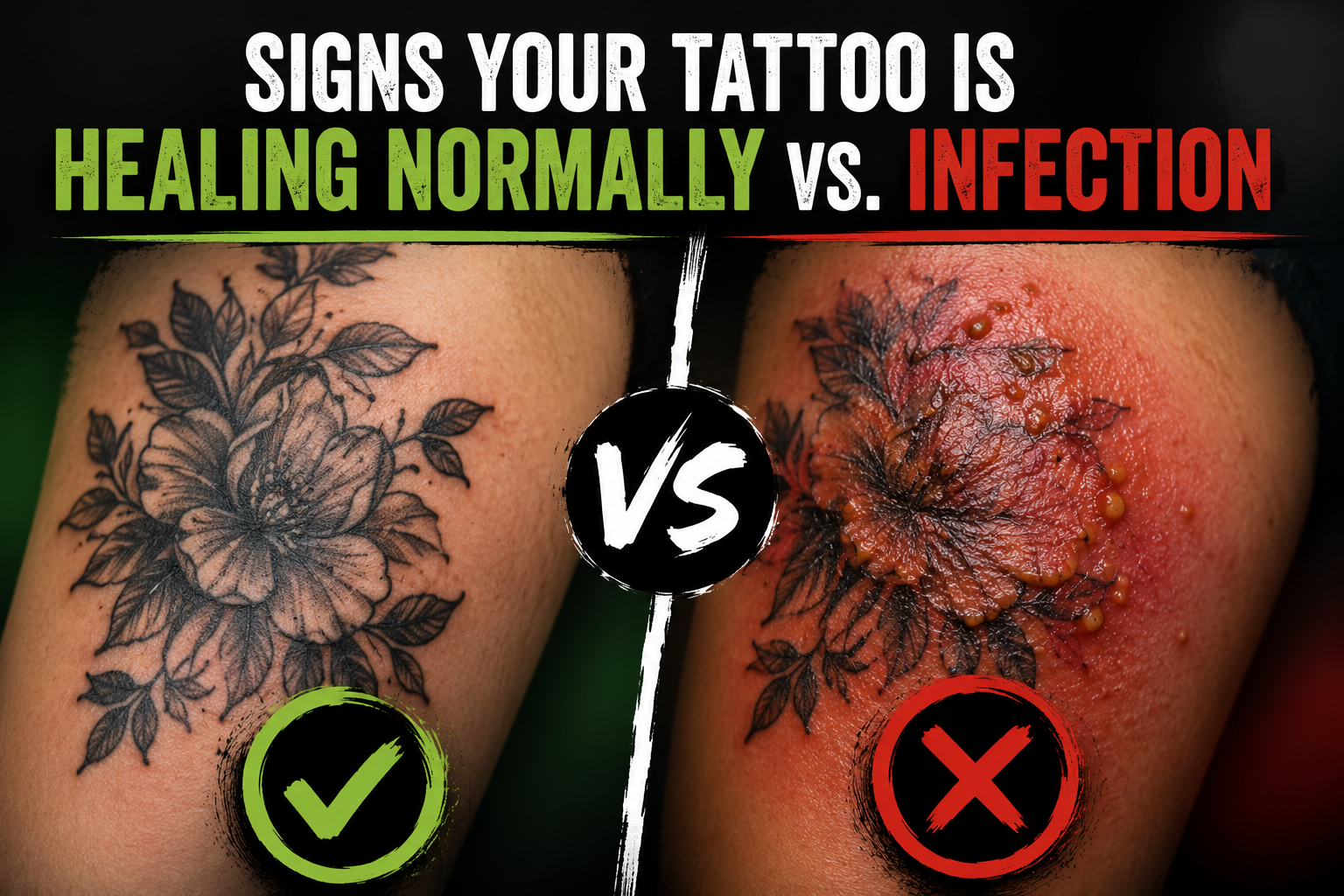
Getting a new tattoo is exciting. Whether it’s your first tattoo or another addition to your collection, proper aftercare is essential to ensure your artwork heals beautifully. One of the most common concerns among tattoo enthusiasts is distinguishing between normal healing symptoms and signs of infection.
It’s natural to experience redness, tenderness, peeling, and itching after getting a tattoo. However, certain symptoms can indicate that something isn’t healing correctly. Knowing the difference can help you take action early and protect both your health and your tattoo.
In this guide, we’ll explain the normal tattoo healing process, common healing symptoms, warning signs of infection, and when it’s time to seek professional help.
Understanding the Tattoo Healing Process
A tattoo is more than ink under the skin. During the tattooing process, needles penetrate the skin thousands of times to deposit pigment into the dermis. Your body recognizes this as an injury and immediately starts repairing the affected area.
The healing process generally occurs in four stages:
Stage 1: Initial Healing (Days 1–3)
During the first few days, your tattoo may appear:
- Red
- Slightly swollen
- Warm to the touch
- Tender or sore
You may also notice clear fluid mixed with small amounts of ink and blood. This is a normal part of the body’s healing response.
Stage 2: Peeling and Itching (Days 4–14)
As the skin begins repairing itself, the tattoo may:
- Feel dry
- Start peeling
- Become itchy
- Appear dull or cloudy
Many people become concerned during this stage, but peeling is completely normal and similar to a mild sunburn.
Stage 3: Surface Recovery (Weeks 2–4)
Most visible healing occurs during this phase. Peeling reduces, itching subsides, and the tattoo starts looking clearer.
Stage 4: Deep Skin Healing (Up to 3 Months)
Although the surface may appear healed, deeper layers of skin continue recovering for several weeks. Proper aftercare remains important even when the tattoo looks fully healed.
Signs Your Tattoo Is Healing Normally
Many normal healing symptoms are often mistaken for infection. Here are the most common signs that your tattoo is recovering properly.
Mild Redness Around the Tattoo
A fresh tattoo typically causes redness around the inked area.
Normal redness:
- Appears immediately after tattooing
- Gradually decreases over several days
- Remains localized to the tattoo area
If the redness is fading rather than spreading, it’s generally a good sign.
Slight Swelling
Minor swelling is the body’s natural inflammatory response.
Swelling is more common in:
- Larger tattoos
- Highly detailed work
- Sensitive body areas such as ribs, feet, or hands
Normal swelling should begin improving within a few days.
Light Scabbing
Small scabs can form as the skin repairs itself.
Healthy scabs are:
- Thin
- Dry
- Light in color
Heavy, thick scabbing may indicate excessive trauma or improper aftercare.
Peeling Skin
One of the most common healing symptoms is peeling.
The skin may flake off in small pieces, similar to skin peeling after a sunburn. This does not mean your tattoo is losing ink.
Never pick or pull peeling skin.
Itching
Itching is a normal sign of healing.
As new skin forms, nerve endings become active, creating an itchy sensation.
Mild to moderate itching is expected, particularly during the second week.
Slight Tightness
Many people describe a fresh tattoo as feeling tight or stretched.
This occurs because the skin is recovering and regenerating.
Dull or Cloudy Appearance
During healing, your tattoo may temporarily look:
- Less vibrant
- Cloudy
- Slightly faded
This is often called the “milky phase” and usually resolves as healing progresses.
Signs Your Tattoo May Be Infected
While some discomfort is expected, certain symptoms should never be ignored.
Tattoo infections can develop due to:
- Poor aftercare
- Excessive touching
- Contaminated surfaces
- Swimming too soon
- Improper hygiene
- Weakened immune system
Recognizing these warning signs early is important.
Redness That Continues to Spread
Normal redness should decrease over time.
Infected tattoos often show:
- Expanding redness
- Bright red skin
- Red patches extending beyond the tattoo
If redness continues worsening after several days, infection may be present.
Increasing Pain
A fresh tattoo can feel sore initially.
However, pain should gradually improve.
Warning signs include:
- Sharp pain
- Throbbing pain
- Pain that worsens each day
Increasing discomfort often indicates a problem.
Excessive Swelling
Persistent swelling that continues growing rather than shrinking may signal infection.
Seek attention if swelling becomes severe or limits movement.
Pus or Thick Discharge
One of the clearest signs of infection is abnormal discharge.
Watch for:
- Yellow pus
- Green discharge
- Thick fluid
- Foul-smelling drainage
Healthy tattoos may release clear plasma initially, but pus is never normal.
Bad Odor
A healing tattoo should not smell unpleasant.
Strong or foul odors can indicate bacterial growth and infection.
Fever and Chills
Systemic symptoms require immediate medical attention.
These include:
- Fever
- Chills
- Fatigue
- Body aches
If infection spreads beyond the tattoo site, professional treatment is necessary.
Red Streaks Around the Tattoo
Red streaks moving away from the tattoo can indicate a serious infection affecting the lymphatic system.
This symptom should never be ignored.
Hot Skin After Several Days
A fresh tattoo may feel warm initially.
However, persistent heat after the first few days can indicate inflammation or infection.
Normal Tattoo Healing vs. Infection: Quick Comparison
| Symptom | Normal Healing | Possible Infection |
|---|---|---|
| Redness | Mild and decreasing | Spreading and worsening |
| Swelling | Improves within days | Continues increasing |
| Itching | Mild to moderate | Severe irritation with redness |
| Discharge | Clear plasma | Yellow or green pus |
| Pain | Gradually decreases | Intensifies over time |
| Odor | None | Foul smell |
| Fever | No | Yes |
| Red Streaks | No | Yes |
Common Mistakes That Increase Infection Risk
Even a professionally applied tattoo can become infected if aftercare instructions aren’t followed.
Touching the Tattoo Frequently
Your hands carry bacteria.
Constant touching increases infection risk significantly.
Always wash your hands before cleaning or moisturizing your tattoo.
Picking Scabs
Picking can:
- Remove ink
- Cause scars
- Introduce bacteria
- Delay healing
Allow scabs to fall off naturally.
Swimming Too Soon
Pools, lakes, rivers, and hot tubs contain bacteria and chemicals that can irritate a healing tattoo.
Avoid swimming until the tattoo is fully healed.
Excessive Sweating
Heavy workouts immediately after getting a tattoo can expose the skin to bacteria and friction.
This may interfere with proper healing.
Using Harsh Products
Avoid:
- Alcohol-based products
- Strong fragrances
- Abrasive scrubs
- Petroleum-heavy products unless recommended
Stick to artist-approved aftercare products.
How to Promote Healthy Tattoo Healing
The best way to avoid infection is through proper aftercare.
Keep It Clean
Wash your tattoo gently using:
- Lukewarm water
- Mild fragrance-free soap
Avoid scrubbing.
Moisturize Correctly
Apply a thin layer of recommended tattoo aftercare lotion.
Too much moisturizer can suffocate the skin.
Wear Loose Clothing
Tight clothing creates friction and irritation.
Allow your tattoo room to breathe during healing.
Stay Hydrated
Healthy skin heals more effectively when properly hydrated.
Follow Your Artist’s Instructions
Every tattoo is unique.
Your artist’s aftercare recommendations should always be your primary guide.
When Should You Contact Your Tattoo Artist?
Reach out to your tattoo artist if you notice:
- Unusual healing patterns
- Excessive scabbing
- Severe itching
- Concerns about aftercare
Experienced artists have seen thousands of healing tattoos and can often identify whether a symptom is normal.
When Should You See a Doctor?
Seek medical attention immediately if you experience:
- Fever
- Pus
- Red streaks
- Severe swelling
- Persistent worsening pain
- Difficulty moving the affected area
Medical treatment may include antibiotics or additional care to prevent complications.
Tattoo Aftercare Tips from Moulee Tattoo Art
At Moulee Tattoo Art, we believe that great tattoos deserve great aftercare.
To ensure the best healing experience:
- Follow all aftercare instructions carefully.
- Avoid swimming until fully healed.
- Keep the tattoo clean and moisturized.
- Never pick peeling skin or scabs.
- Avoid excessive sun exposure.
- Stay patient throughout the healing process.
Remember, a tattoo heals only once. Proper care during the first few weeks can make a significant difference in how your tattoo looks for years to come.
Final Thoughts
Knowing the difference between normal tattoo healing and infection can save you from unnecessary worry and help you identify genuine problems early.
Normal healing typically includes mild redness, slight swelling, peeling, itching, and temporary dullness. These symptoms gradually improve as the skin recovers.
On the other hand, spreading redness, worsening pain, pus, fever, bad odor, and severe swelling should never be ignored.
If you’re ever unsure, contact your tattoo artist or a healthcare professional. Early intervention can prevent complications and protect both your health and your tattoo.
A well-healed tattoo is a lifelong piece of art. With proper aftercare, patience, and attention to warning signs, you can ensure your tattoo remains vibrant, healthy, and beautiful for years to come.
Moulee Tattoo Art – Creating Tattoos That Heal as Beautifully as They Look.
Leave a Reply