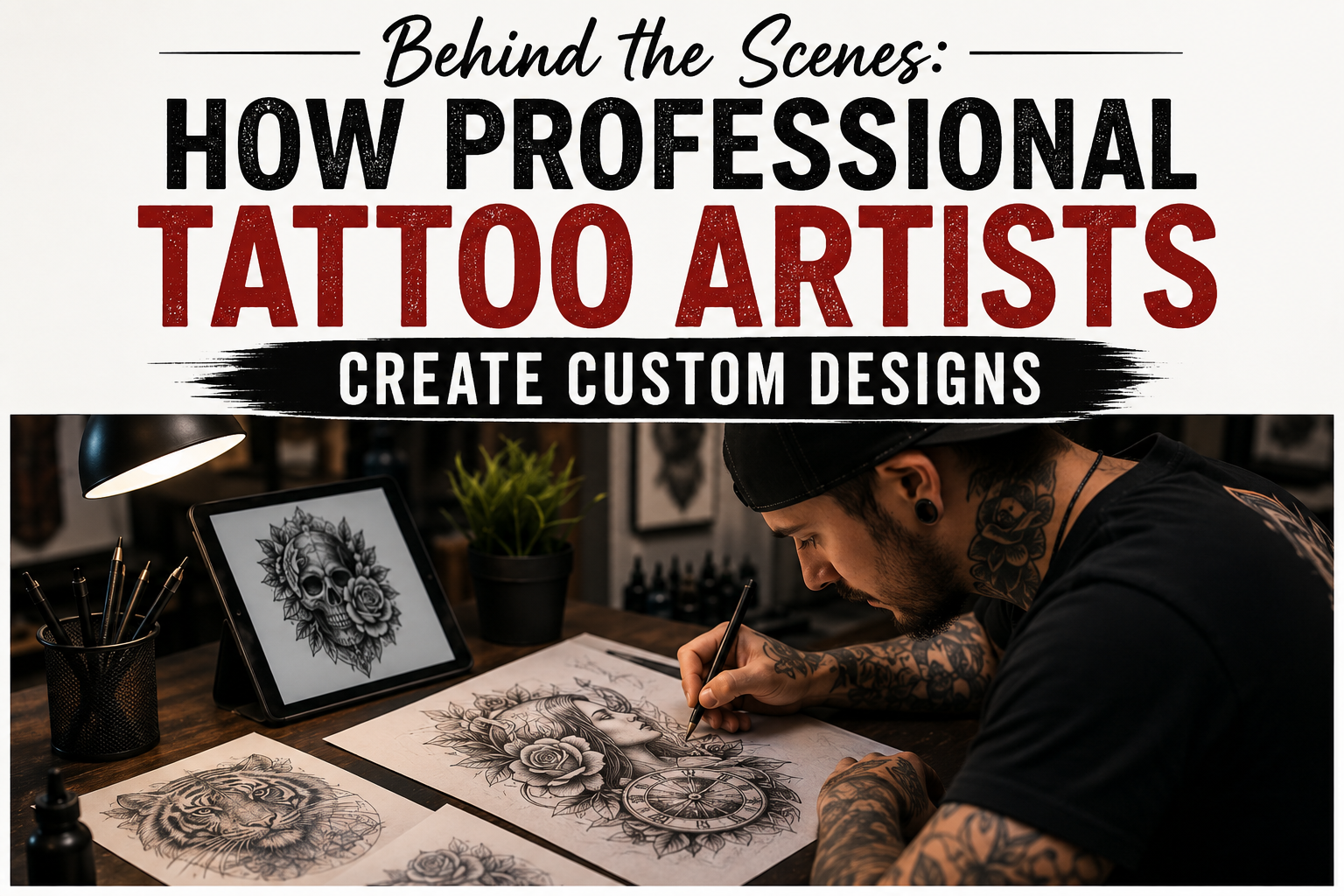
Introduction
Every custom tattoo tells a story, but what many people don’t see is the creative process behind it. A professional tattoo isn’t simply copied from an image on the internet—it is carefully designed to reflect the client’s personality, ideas, and body placement. From the first consultation to the final stencil, every step requires creativity, technical knowledge, and collaboration between the artist and the client.
Whether you’re planning your first tattoo or adding another piece to your collection, understanding how custom tattoo designs are created will help you appreciate the artistry involved and prepare for your tattoo journey.
Why Choose a Custom Tattoo?
A custom tattoo is designed specifically for you. Instead of selecting a ready-made design, you work with a tattoo artist to create artwork that represents your story, memories, beliefs, or passions.
Benefits of a custom tattoo include:
- One-of-a-kind artwork
- Personalized meaning
- Better body placement
- Improved flow with your anatomy
- Greater artistic value
Professional tattoo artists use their creativity to transform your ideas into a design that is both visually appealing and technically suitable for tattooing.
Step 1: The Initial Consultation
Every custom tattoo begins with a conversation.
During the consultation, your tattoo artist will ask questions such as:
- What does the tattoo mean to you?
- What style do you prefer?
- Where do you want the tattoo?
- How large should it be?
- Do you prefer black and grey or color?
Many clients bring reference images, sketches, Pinterest boards, or photos. These references help the artist understand your vision but serve as inspiration rather than something to copy directly.
A professional artist also explains what will work best for your skin, body shape, and long-term appearance.
Step 2: Understanding Your Story
The best tattoo artists don’t simply draw—they listen.
Your personal story often becomes the foundation of the design. Whether you’re celebrating a milestone, honoring a loved one, expressing your faith, or symbolizing personal growth, the artist carefully incorporates meaningful elements into the artwork.
This collaborative approach transforms an ordinary tattoo into something truly personal.
Step 3: Research and Inspiration
Before putting pencil to paper, artists spend time researching.
Depending on the project, they may study:
- Flowers and botanical references
- Animal anatomy
- Cultural symbols
- Mythology
- Lettering styles
- Architectural elements
- Geometric patterns
- Real-life photographs
This research helps ensure every detail is accurate while maintaining originality.
Step 4: Sketching Initial Concepts
Now the creative process begins.
Artists usually create rough sketches to explore different compositions and layouts. At this stage, they focus on:
- Overall balance
- Placement
- Size
- Flow
- Main visual elements
Several concepts may be developed before narrowing down the strongest design.
These early sketches are flexible and often evolve based on client feedback.
Step 5: Refining the Artwork
Once the concept is approved, the artist begins refining every detail.
This includes:
- Cleaner line work
- Better proportions
- Improved shading
- Balanced composition
- Color planning
- Fine details
Professional artists also simplify overly complicated ideas when necessary. Tiny details that look good on paper may blur over time once tattooed, so the design must be adjusted for longevity.
Step 6: Designing for the Body
Unlike paper or canvas, the human body has curves, muscles, and movement.
A professional tattoo artist designs specifically for the body part being tattooed.
For example:
- Sleeves wrap naturally around the arm.
- Chest tattoos follow muscle structure.
- Back pieces maintain symmetry.
- Leg tattoos complement natural contours.
Body placement affects both aesthetics and healing, making this one of the most important parts of the design process.
Step 7: Client Review and Feedback
Before tattooing begins, you’ll review the final design.
This is your opportunity to request changes, including:
- Size adjustments
- Placement changes
- Additional details
- Color modifications
- Text corrections
Professional artists encourage honest feedback because they want you to feel completely confident before the tattoo becomes permanent.
Step 8: Creating the Final Stencil
Once the artwork is finalized, it is converted into a tattoo stencil.
The stencil acts as a guide during the tattoo session, ensuring accurate placement, symmetry, and proportions.
Before tattooing starts, the stencil is applied to your skin so you can check:
- Position
- Alignment
- Size
- Overall appearance
If needed, the artist will reposition the stencil until you’re satisfied.
Step 9: Preparing for the Tattoo Session
Before the needle touches your skin, the artist prepares everything carefully.
This includes:
- Sterilizing the workstation
- Setting up single-use needles
- Preparing fresh ink caps
- Wearing disposable gloves
- Sanitizing equipment
- Positioning you comfortably
Professional tattoo studios follow strict hygiene protocols to ensure a safe tattoo experience.
Step 10: Bringing the Design to Life
The tattoo process usually follows a structured order:
- Stencil placement
- Outline
- Shading
- Color packing (if applicable)
- Fine details
- Final inspection
Throughout the session, experienced artists monitor skin condition, adjust techniques, and ensure the tattoo develops exactly as planned.
Why Experience Matters
Creating custom tattoos requires more than drawing skills.
Professional tattoo artists understand:
- Skin anatomy
- Needle configurations
- Ink behavior
- Healing processes
- Color longevity
- Body proportions
- Composition and balance
Years of practice enable them to solve design challenges while maintaining artistic quality.
Common Mistakes Clients Make
To help your artist create the best possible tattoo, avoid these common mistakes:
- Bringing too many unrelated ideas
- Requesting extremely small intricate details
- Copying another artist’s work exactly
- Rushing the design process
- Ignoring placement recommendations
- Choosing price over quality
Trusting your artist’s expertise often leads to a much better final result.
The Value of Collaboration
The best custom tattoos are created through teamwork.
You provide the inspiration.
Your tattoo artist contributes artistic experience, technical knowledge, and creative problem-solving.
Together, you create a tattoo that is meaningful, visually balanced, and designed to last for years.
Final Thoughts
Behind every beautiful custom tattoo is hours of planning, research, sketching, revisions, and careful execution. Professional tattoo artists invest significant time into understanding your vision before they ever begin tattooing.
If you’re considering a custom tattoo, choose an experienced artist who values creativity, communication, and hygiene. A thoughtfully designed tattoo isn’t just body art—it’s a permanent expression of your story.
Why Choose Moulee’s Tattoo Art Studio, Pune?
At Moulee’s Tattoo Art Studio, every tattoo begins with your story. Our experienced artists work closely with you through consultations, custom sketching, and design refinement to create artwork that reflects your personality and fits your body perfectly. Using premium inks, sterile equipment, and industry-best hygiene standards, we ensure every tattoo is crafted with precision, creativity, and care.
Whether you’re looking for a minimalist design, realistic portrait, mandala, sleeve, or a completely custom concept, we’re here to bring your vision to life.
Book your consultation today and let us create a tattoo that’s uniquely yours.
Leave a Reply