Introduction
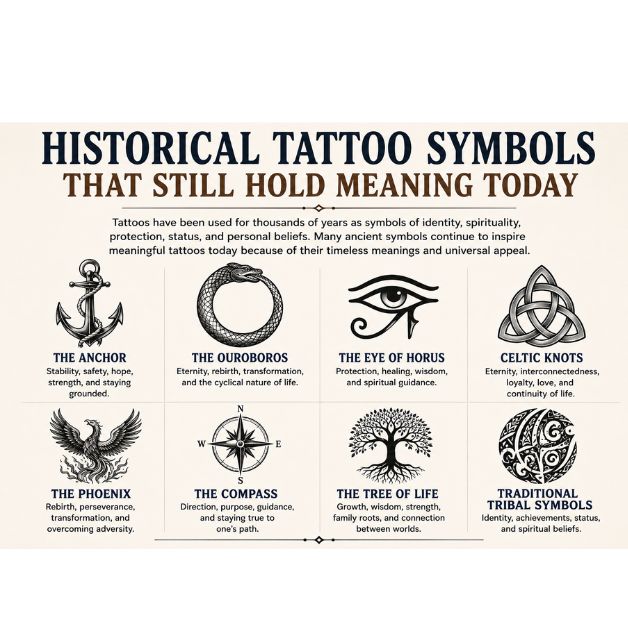
Tattoos have been a part of human civilization for thousands of years. Long before tattooing became a mainstream form of self-expression, people across the world used tattoos to communicate identity, spirituality, social status, protection, achievements, and deeply held beliefs. From ancient Egypt and Celtic Europe to Polynesian islands and maritime communities, tattoo symbolism has played an important role in human culture.
What makes many of these designs remarkable is their ability to transcend time. Despite originating centuries—or even millennia—ago, numerous historical tattoo symbols continue to hold relevance today. Modern tattoo enthusiasts are drawn to these timeless tattoo designs not only for their aesthetic appeal but also for the powerful stories and meanings they carry.
Whether you’re searching for meaningful tattoo ideas, exploring tattoo history, or planning your next piece of body art, understanding the origins and symbolism behind traditional tattoo symbols can help you choose a design that truly resonates with your personal journey.
The Anchor: A Symbol of Stability and Strength
Among the most recognizable historical tattoo symbols is the anchor. Its origins can be traced to sailors and maritime communities who spent months or even years at sea, facing unpredictable weather, dangerous waters, and uncertain journeys.
For sailors, the anchor represented safety and security. When lowered, it held a ship firmly in place, preventing it from drifting during storms or strong currents. Because of this practical function, the anchor became a powerful symbol of stability, hope, and resilience.
In many maritime traditions, sailors would get anchor tattoos after crossing the Atlantic Ocean or achieving significant milestones during their voyages. The symbol often served as a reminder of their experiences and the strength required to survive life at sea.
Today, anchor tattoos remain popular because their symbolism extends far beyond the ocean. Modern wearers often choose anchor designs to represent staying grounded during difficult times, maintaining emotional stability, and holding firmly to their values despite life’s challenges. For many people, an anchor tattoo serves as a daily reminder that strength comes from remaining steady when circumstances become uncertain.
The Ouroboros: The Eternal Cycle of Life
The Ouroboros is one of the oldest and most fascinating ancient tattoo symbols. Depicted as a serpent or dragon consuming its own tail, this symbol has appeared in numerous cultures throughout history, particularly in ancient Egyptian and Greek traditions.
The circular shape of the Ouroboros symbolizes eternity and the endless cycle of existence. It represents concepts such as birth, death, rebirth, renewal, and transformation. Ancient philosophers and spiritual thinkers viewed the symbol as a representation of life’s continuous evolution and the interconnected nature of all things.
Throughout history, the Ouroboros has also been associated with self-reflection, personal transformation, and the idea that endings often create opportunities for new beginnings.
In modern tattoo symbolism, the Ouroboros remains highly meaningful. Many individuals choose this design after experiencing significant life changes, personal growth, recovery, or major transitions. The tattoo serves as a visual reminder that transformation is a natural part of life and that every ending can lead to a new chapter.
Its striking visual appearance combined with profound symbolic depth makes the Ouroboros one of the most enduring symbolic tattoo designs in history.
The Eye of Horus: Protection and Spiritual Awareness
The Eye of Horus originates from ancient Egyptian mythology and remains one of the most recognizable symbols from the ancient world.
According to Egyptian legend, Horus, the sky god, lost his eye during a battle with the god Set. The eye was later restored, becoming a symbol of healing, protection, restoration, and divine power. Ancient Egyptians believed the Eye of Horus offered protection against evil forces and brought wisdom, health, and good fortune.
The symbol frequently appeared in amulets, temple carvings, and funerary objects, reflecting its importance in daily life and spiritual practices.
Today, many tattoo enthusiasts are attracted to the Eye of Horus because of its association with protection and guidance. It often represents inner wisdom, intuition, spiritual awareness, and the pursuit of truth. For some, it serves as a symbol of overcoming adversity and emerging stronger after personal challenges.
Its unique visual design and rich historical significance continue to make it one of the most sought-after ancient tattoo symbols.
Celtic Knots: The Endless Connection
Celtic knotwork is among the most intricate and meaningful forms of ancient artistic expression. Originating in Celtic culture, these elaborate patterns consist of interwoven lines that have no clear beginning or end.
The endless loops found in Celtic knots symbolize eternity, continuity, and the interconnectedness of life. Ancient Celtic societies often used these patterns in religious manuscripts, monuments, jewelry, and ceremonial artwork.
Different variations of Celtic knots can represent specific themes, including loyalty, love, friendship, family bonds, and spiritual unity. Because the lines never break, they also symbolize the continuous flow of life and the enduring nature of human relationships.
Today, Celtic knot tattoos remain popular among individuals who wish to honor their heritage or express values such as commitment, unity, and eternal connection. Their elegant appearance and deep symbolism make them timeless tattoo designs that continue to resonate across generations.
The Phoenix: Rising Stronger Than Before
Few symbols capture the concept of resilience as powerfully as the phoenix. This legendary bird appears in multiple ancient mythologies, including Egyptian, Greek, Persian, and Chinese traditions.
According to legend, the phoenix reaches the end of its life cycle and is consumed by flames, only to rise again from its own ashes stronger and renewed. This remarkable story has made the phoenix a universal symbol of rebirth, perseverance, transformation, and triumph over adversity.
Throughout history, the phoenix has represented hope during difficult times and the ability to emerge stronger after loss or hardship. It reminds people that setbacks are not permanent and that growth often comes through struggle.
Modern phoenix tattoos are especially popular among individuals who have overcome significant personal challenges, recovered from difficult experiences, or embarked on transformative life journeys. The design symbolizes survival, personal evolution, and the courage to begin again.
For many tattoo enthusiasts, the phoenix serves as a powerful visual representation of their own resilience and determination.
The Compass: Finding Your Direction
Before the age of GPS technology, sailors depended on compasses for navigation across vast oceans. A reliable compass often meant the difference between reaching a destination safely and becoming lost at sea.
Because of its critical role in exploration and survival, the compass became a symbol of direction, purpose, guidance, and safe passage. Sailors frequently incorporated compass imagery into their tattoos as protective symbols during long voyages.
Today, compass tattoos carry a broader meaning. Many people choose them as reminders to stay true to their values and maintain focus on their goals. The symbol often represents personal direction, life purpose, and the pursuit of meaningful experiences.
Travelers, adventurers, and individuals embarking on new chapters in life frequently connect with the compass because it reflects the desire to navigate uncertainty with confidence and determination.
Its combination of historical significance and contemporary relevance makes the compass one of the most meaningful tattoo ideas available today.
The Tree of Life: Growth, Wisdom, and Connection
The Tree of Life appears in countless cultures and mythological traditions around the world. Variations of this symbol can be found in Norse mythology, Celtic traditions, ancient Mesopotamian civilizations, and many spiritual belief systems.
Although interpretations vary, the Tree of Life generally represents growth, wisdom, strength, and interconnectedness. Its roots reach deep into the earth while its branches extend toward the heavens, symbolizing the connection between the physical and spiritual realms.
The tree also represents family heritage, personal development, and the enduring cycle of life. Just as trees grow stronger over time while remaining rooted to their origins, people often use this symbol to express personal growth while honoring their past.
Modern Tree of Life tattoos remain incredibly popular because they carry universal meanings that resonate across cultures. Whether representing family connections, spiritual beliefs, or personal development, this design continues to inspire individuals seeking deeply symbolic tattoo designs.
Traditional Tribal Symbols: Identity and Cultural Heritage
Tribal tattoos represent some of the oldest tattoo traditions in human history. Indigenous cultures throughout Polynesia, New Zealand, Samoa, Hawaii, and other regions developed sophisticated tattooing practices that served important cultural and spiritual purposes.
In many tribal societies, tattoos were not merely decorative. They communicated identity, social rank, achievements, ancestry, life experiences, and spiritual beliefs. Each design often carried specific meanings unique to the individual’s community and personal history.
For example, traditional Polynesian and Maori tattoos frequently told detailed stories about a person’s lineage, accomplishments, and role within society. These tattoos were deeply connected to cultural identity and spiritual traditions.
Today, tribal-inspired tattoos remain popular due to their bold aesthetics and historical significance. However, it is essential to approach these designs with respect and understanding. Individuals considering tribal tattoos should take time to learn about the cultural origins and meanings behind specific patterns rather than viewing them solely as decorative artwork.
Respecting the traditions behind these symbols helps preserve their cultural importance while honoring the communities that created them.
Why Historical Tattoo Symbols Continue to Endure
The enduring appeal of historical tattoo symbols lies in their ability to communicate universal human experiences. Themes such as resilience, protection, transformation, identity, growth, and purpose remain just as relevant today as they were thousands of years ago.
Unlike temporary trends, these traditional tattoo symbols have survived because they connect people to larger stories and shared human values. They allow individuals to express personal beliefs while participating in a tradition that spans generations and cultures.
Whether someone chooses an anchor, phoenix, compass, or Tree of Life, these designs offer more than visual beauty—they carry layers of meaning that continue to inspire people around the world.
Conclusion
Historical tattoo symbols are far more than artistic designs. They are visual narratives that carry centuries of tradition, wisdom, culture, and meaning. From the steadfast anchor and transformative phoenix to the protective Eye of Horus and interconnected Celtic knots, these symbols have endured because they speak to fundamental aspects of the human experience.
When choosing a tattoo, understanding its history can add greater depth and significance to the design. By exploring the stories behind these ancient tattoo symbols, you can select artwork that reflects your personal journey while honoring the rich traditions that shaped tattoo culture throughout history.
The most meaningful tattoos are often those that connect the past with the present—turning timeless symbolism into a lasting expression of who you are.
Frequently Asked Questions (FAQ)
What are historical tattoo symbols?
Historical tattoo symbols are designs that originated in ancient civilizations, cultural traditions, or historical communities and continue to be used today because of their symbolic meanings and cultural significance.
Why are ancient tattoo symbols still popular?
Ancient tattoo symbols remain popular because they represent timeless themes such as protection, strength, transformation, wisdom, identity, and personal growth. Their meanings continue to resonate with modern tattoo enthusiasts.
Which tattoo symbol represents resilience?
Several symbols represent resilience, including the phoenix, anchor, and Ouroboros. Each symbolizes the ability to overcome challenges, adapt to change, and emerge stronger from adversity.
Are tribal tattoos cultural symbols?
Yes. Traditional tribal tattoos often carry deep cultural, spiritual, and historical significance. It is important to understand and respect their origins before choosing a tribal-inspired design.
What is the most meaningful historical tattoo symbol?
The most meaningful symbol varies from person to person. Popular choices include the Tree of Life for growth and family, the Eye of Horus for protection, the Phoenix for rebirth, and the Compass for guidance and purpose.
How can I choose a symbolic tattoo design?
Consider your personal values, life experiences, goals, and beliefs. Research the history and symbolism behind various designs to find a tattoo that genuinely reflects your story and resonates with your journey.
Leave a Reply