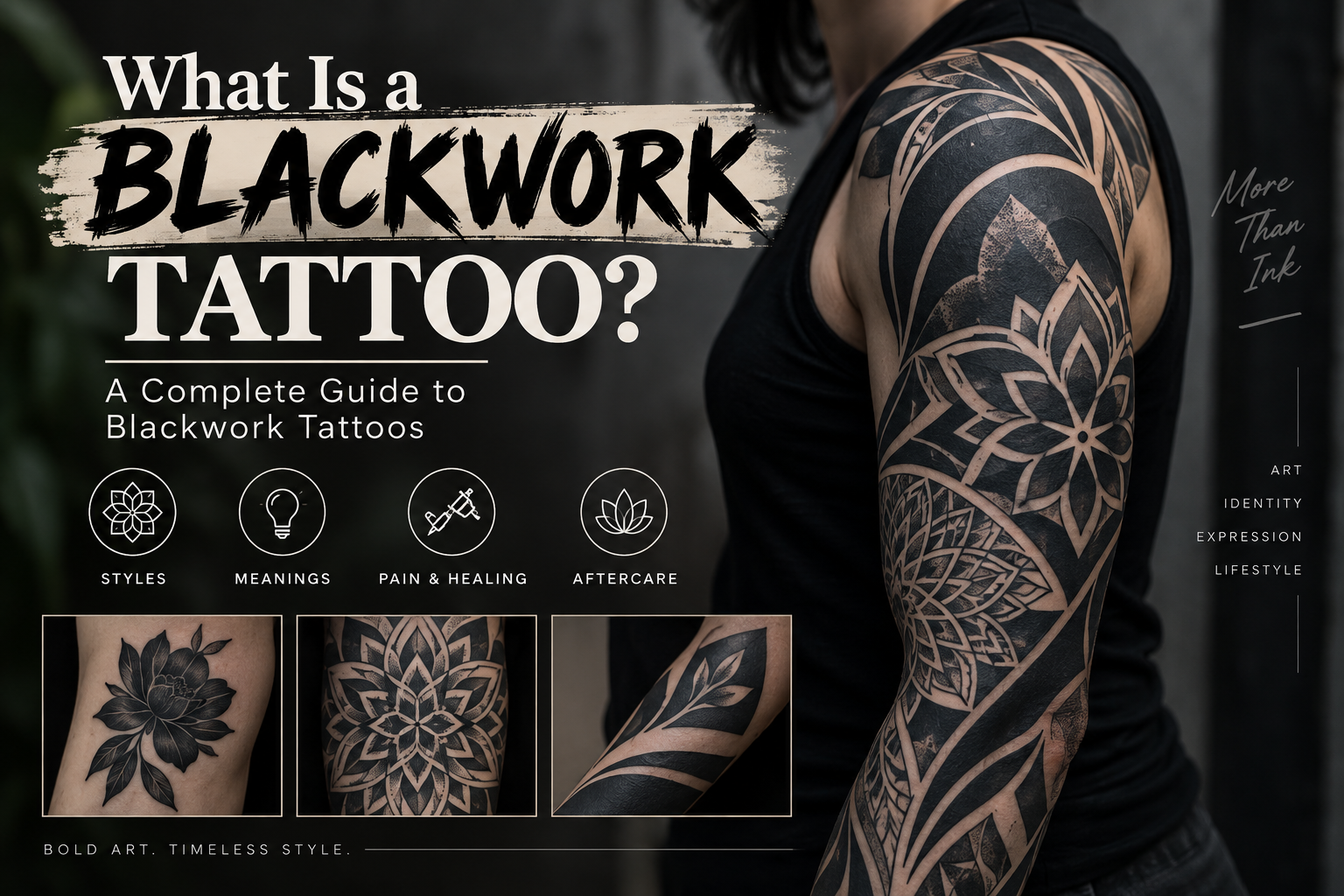
Blackwork tattoos are one of the most distinctive and visually striking tattoo styles. Recognized for their use of bold black ink, strong lines, high contrast, intricate patterns, and negative space, blackwork tattoos can be designed in many different ways. From small and minimalist pieces to large geometric sleeves and detailed body artwork, this style offers plenty of creative possibilities. But what exactly is a blackwork tattoo, how is it different from a regular black tattoo, and is it the right choice for you? This guide explains everything you need to know about blackwork tattoos, including their characteristics, popular styles, pain level, longevity, aftercare, and frequently asked questions.
What Is a Blackwork Tattoo?
A blackwork tattoo is a tattoo style that primarily uses black ink to create bold, high-contrast artwork. Unlike colorful tattoo styles that rely on multiple shades and colors, blackwork focuses on black ink, strong outlines, solid areas, patterns, shading, and negative space. The untouched skin around or within the black ink becomes an important part of the overall design, creating contrast and helping individual elements stand out.
Blackwork tattoos can be simple or highly detailed depending on the design and the artist’s approach. Some tattoos may feature clean geometric shapes and minimal lines, while others can include complex patterns, ornamental artwork, abstract compositions, animals, flowers, or large areas of solid black. The defining feature is not simply the use of black ink but the way black, skin, linework, and contrast are combined to create the artwork.
What Does a Blackwork Tattoo Look Like?
A typical blackwork tattoo has a bold and graphic appearance. The design may use thick black lines, completely saturated areas, detailed patterns, or a combination of black ink and negative space. Because there is usually a strong contrast between the black ink and the natural skin, blackwork tattoos can have a very powerful visual effect.
The appearance of a blackwork tattoo depends on the artist’s technique, the size of the design, the placement on the body, and the amount of black ink used. A small blackwork tattoo might have a simple geometric pattern, while a large blackwork sleeve can combine several patterns and techniques to create a flowing composition across the arm.
Where Did Blackwork Tattoos Come From?
Although the term “blackwork” is commonly associated with modern tattooing, the use of bold black patterns has a long history. Traditional tattooing cultures, particularly Polynesian tattoo traditions, have used strong black patterns and geometric designs for centuries. These traditional approaches have influenced many contemporary tattoo styles.
Modern blackwork has developed into a broad artistic category. Today’s tattoo artists combine elements of traditional tattooing with geometric art, ornamental designs, abstract artwork, dotwork, illustration, and graphic design. As a result, modern blackwork is not limited to one specific cultural or visual tradition. It can be highly personal and can be adapted to different artistic preferences.
What Are the Different Types of Blackwork Tattoos?
Blackwork is a broad style that includes several different techniques and design approaches. Geometric blackwork is one of the most popular forms and uses shapes, lines, symmetry, and repeating patterns to create structured designs. Circles, triangles, sacred geometry, spirals, and symmetrical patterns are often incorporated into these tattoos.
Ornamental blackwork focuses on decorative and intricate designs. Mandalas, floral patterns, symmetrical details, and jewelry-inspired elements are often used to create an elegant appearance. These designs can work particularly well on areas such as the forearm, shoulder, chest, back, or thigh.
Dotwork can also be combined with blackwork to create texture and shading. Instead of creating every shaded area with solid ink, tattoo artists use individual dots to produce gradients and depth. This technique can add detail to a blackwork tattoo while maintaining its monochromatic appearance.
Abstract blackwork is another popular approach. Rather than depicting a recognizable object or image, abstract blackwork focuses on shapes, lines, movement, contrast, and composition. The result can be highly artistic and unique to the individual.
Illustrative blackwork uses black ink to create recognizable subjects such as animals, flowers, portraits, objects, or scenes. Instead of relying on color, the artist uses linework, shading, texture, and contrast to create the image.
Blackout tattoos are also sometimes associated with blackwork. A blackout tattoo generally involves covering a large area of skin with solid black ink. Some artists combine blackout sections with negative-space patterns to create more complex designs.
Is a Blackwork Tattoo the Same as a Black Tattoo?
A blackwork tattoo and a black tattoo are not necessarily the same thing. A black tattoo simply means that black ink is used in the design. Blackwork, on the other hand, describes a broader artistic style that emphasizes black ink, contrast, bold linework, solid areas, patterns, and negative space.
For example, a small black outline of a heart can be described as a black tattoo, but it would not necessarily be considered blackwork. A geometric design made with bold black shapes, solid fills, and negative space would be much more representative of the blackwork style.
Does a Blackwork Tattoo Use Only Black Ink?
Traditional blackwork tattoos primarily use black ink, but the exact technique can vary from artist to artist. Many blackwork designs rely entirely on black ink and natural skin, using the contrast between the two to create the artwork.
Artists can create different levels of depth using solid black fills, thick or fine lines, dotwork, stippling, shading, and negative space. Some contemporary designs may include small elements of other colors, but black generally remains the dominant visual element.
Are Blackwork Tattoos Suitable for All Skin Tones?
Blackwork tattoos can be designed for a wide range of skin tones. However, the final appearance of a tattoo can vary depending on the individual’s skin tone, undertone, placement, design, and the tattooing technique used.
An experienced tattoo artist should consider these factors when creating the design. Line thickness, contrast, spacing, negative space, and shading can all be adjusted to create a tattoo that remains visually clear and balanced on the skin. Choosing an artist with experience working across different skin tones is an important part of getting the best possible result.
Do Blackwork Tattoos Hurt More?
Blackwork tattoos are not automatically more painful than other tattoo styles. Tattoo pain varies from person to person and depends on factors such as placement, tattoo size, session length, individual pain tolerance, and the amount of work being performed.
Large blackwork tattoos may sometimes require longer sessions or repeated work over certain areas of skin, which can make the experience feel more intense. Areas such as the ribs, sternum, elbows, knees, and feet can also be more sensitive than areas with more cushioning.
The best way to prepare for a tattoo session is to follow your artist’s instructions, stay hydrated, eat properly before the appointment, and communicate with the artist if you need a break during a long session.
How Long Does a Blackwork Tattoo Take?
The time required for a blackwork tattoo depends on its size, complexity, placement, and the amount of solid black coverage involved. A small and simple blackwork tattoo may take less than an hour, while a detailed sleeve, back piece, or large geometric design may require several hours or multiple sessions.
Large blackwork tattoos are often completed gradually. This allows the artist to work carefully, maintain consistent saturation and line quality, and give the skin sufficient time to recover between sessions. Your tattoo artist can provide a more accurate estimate after reviewing the design and discussing the desired size and placement.
How Long Do Blackwork Tattoos Last?
Blackwork tattoos can remain visually strong for many years when they are properly applied and cared for. However, like every tattoo, blackwork will naturally change over time. Skin aging, sun exposure, lifestyle, placement, and individual skin characteristics can all affect how a tattoo looks as it ages.
Black ink can gradually soften or lose some of its original sharpness. Fine details may become less defined over many years, while larger areas of solid black can continue to have a strong visual presence. Protecting a healed tattoo from excessive sun exposure and following good skincare practices can help maintain its appearance.
How Do You Take Care of a Blackwork Tattoo?
Proper aftercare is an important part of the tattooing process. After receiving a blackwork tattoo, you should follow the specific instructions provided by your tattoo artist because aftercare recommendations can vary depending on the tattoo, placement, and products used.
Generally, a fresh tattoo should be kept clean and should not be unnecessarily touched, scratched, or picked. During the healing process, avoid activities that could excessively irritate or soak the tattoo. Allow peeling skin to come away naturally rather than removing it yourself. Once the tattoo has fully healed, protecting it from excessive UV exposure can help preserve the appearance of the ink.
Can Blackwork Tattoos Be Minimalist?
Yes, blackwork tattoos can absolutely be minimalist. The style does not require a large amount of black ink or a large tattoo. Small geometric designs, simple symbols, clean linework, and carefully planned negative space can all be used to create minimalist blackwork tattoos.
Minimalist blackwork can be particularly appealing to people who want a tattoo that is subtle in size but still has a strong visual identity. The key is creating a design that works well at a smaller scale without losing its clarity.
Are Blackwork Tattoos Good for Sleeves?
Blackwork is an excellent choice for tattoo sleeves because the style works particularly well across large areas of the body. A full or half sleeve can combine geometric patterns, ornamental details, dotwork, abstract shapes, illustrative artwork, and solid black sections.
When designing a blackwork sleeve, it is important to think about the entire arm rather than treating each tattoo as a separate design. A skilled artist can plan the placement, spacing, flow, and negative space so that the individual elements work together as one cohesive composition.
Can You Get a Blackwork Tattoo as a Cover-Up?
Blackwork can be used for certain tattoo cover-ups because the style allows artists to incorporate large areas of saturated black. However, not every existing tattoo can be completely covered with black ink.
The success of a cover-up depends on factors such as the size and darkness of the existing tattoo, the colors used, its location, and the design chosen for the new tattoo. In some cases, laser tattoo removal or fading may be recommended before a cover-up. An experienced tattoo artist should examine the existing tattoo before recommending the best approach.
What Should You Consider Before Getting a Blackwork Tattoo?
Choosing the right tattoo artist is one of the most important decisions when getting a blackwork tattoo. Look for an artist whose portfolio demonstrates strong blackwork skills, clean lines, consistent saturation, balanced compositions, and effective use of negative space. If possible, review healed examples of the artist’s work rather than looking only at freshly completed tattoos.
Placement is another important consideration. A blackwork design can look very different depending on where it is placed because the body’s natural curves and movement affect how the artwork is viewed. Your artist can help determine the appropriate size and placement based on your design.
You should also think carefully about the size of the tattoo. Intricate blackwork designs often need enough space for their details to remain clear. A design that looks excellent at a larger size may lose some of its visual clarity if it is made too small.
Most importantly, remember that a tattoo is a long-term decision. Choose artwork that reflects your personal style and something you will be comfortable wearing for many years.
Blackwork Tattoo vs. Other Tattoo Styles
Blackwork differs from many other tattoo styles because of its emphasis on black ink and strong contrast. Fine-line tattoos generally focus on delicate and thin lines, while realism aims to recreate realistic subjects through detailed shading and tonal transitions. Traditional tattoos often use bold outlines, recognizable motifs, and strong colors.
Dotwork relies heavily on individual dots to create shading and texture, while black-and-grey tattoos combine black ink with different shades of grey to create depth. Blackwork can incorporate elements of several of these techniques, which is one reason why it has become such a versatile tattoo style.
Frequently Asked Questions About Blackwork Tattoos
What is a blackwork tattoo?
A blackwork tattoo is a tattoo style that primarily uses black ink to create bold, high-contrast artwork. It can include solid black areas, strong linework, geometric patterns, ornamental designs, illustrations, dotwork, and negative space.
Are blackwork tattoos only black?
Traditional blackwork primarily uses black ink, but contemporary artists may combine blackwork techniques with other elements. Black remains the main visual component of the design.
Do blackwork tattoos hurt more than normal tattoos?
Not necessarily. Tattoo pain depends mainly on the placement, size, session duration, technique, and individual pain tolerance. Large blackwork pieces can sometimes feel more intense because they may require longer sessions or extensive saturated areas.
Do blackwork tattoos fade?
Yes. All tattoos naturally change over time. Sun exposure, aging, skin changes, and other factors can cause ink to fade or soften. Proper aftercare and sun protection can help maintain the tattoo’s appearance.
Is blackwork suitable for darker skin tones?
Yes. Blackwork can be created on different skin tones. The artist should consider contrast, design, spacing, line thickness, and technique when creating the tattoo.
How much does a blackwork tattoo cost?
The cost of a blackwork tattoo depends on the artist, studio, design complexity, size, placement, and time required. A small design may cost considerably less than a large, detailed sleeve or back piece.
Can blackwork cover an old tattoo?
Yes, blackwork can work well for some cover-ups because it allows the artist to use larger areas of saturated black. However, the existing tattoo needs to be evaluated before determining whether a cover-up is possible.
Can blackwork tattoos be small?
Yes. Blackwork can be minimalist and small. Simple geometric designs, symbols, linework, and negative-space compositions can all work as small tattoos.
What is the difference between blackwork and blackout tattoos?
Blackwork is a broad tattoo style that can include patterns, linework, geometric artwork, illustrations, dotwork, and negative space. Blackout tattooing generally involves covering a large section of skin with solid black ink. Blackout designs can sometimes incorporate blackwork-style negative-space patterns.
How long does a blackwork tattoo take to heal?
Healing time varies depending on the tattoo, placement, technique, and individual skin. Follow your tattoo artist’s specific aftercare instructions and allow the tattoo to heal naturally.
Is a Blackwork Tattoo Right for You?
A blackwork tattoo may be a good choice if you prefer bold, graphic, high-contrast artwork and want a design that relies primarily on black ink rather than multiple colors. Because blackwork can range from minimalist symbols to large-scale sleeves, it can be adapted to many different personal styles.
The most important part of getting a blackwork tattoo is choosing an experienced artist who understands linework, saturation, negative space, composition, and the way designs interact with the body’s natural shape. Take time to review an artist’s portfolio, discuss your ideas, and understand the aftercare process before booking your appointment.
Final Thoughts
Blackwork tattoos combine bold black ink, strong contrast, precise linework, patterns, shading, and negative space to create a distinctive style of body art. Their versatility makes them suitable for everything from small minimalist tattoos to intricate geometric sleeves and large-scale body pieces.
The appeal of blackwork is not simply the amount of black ink used. A successful blackwork tattoo depends on thoughtful design, balanced composition, clean execution, appropriate spacing, and an understanding of how the artwork will interact with the body.
If you are considering a blackwork tattoo, start by finding an artist whose portfolio matches the style you want. Discuss your design, placement, size, and expectations before beginning the tattoo. With the right planning and an experienced artist, blackwork can become a striking and long-lasting piece of personal artwork.
Leave a Reply