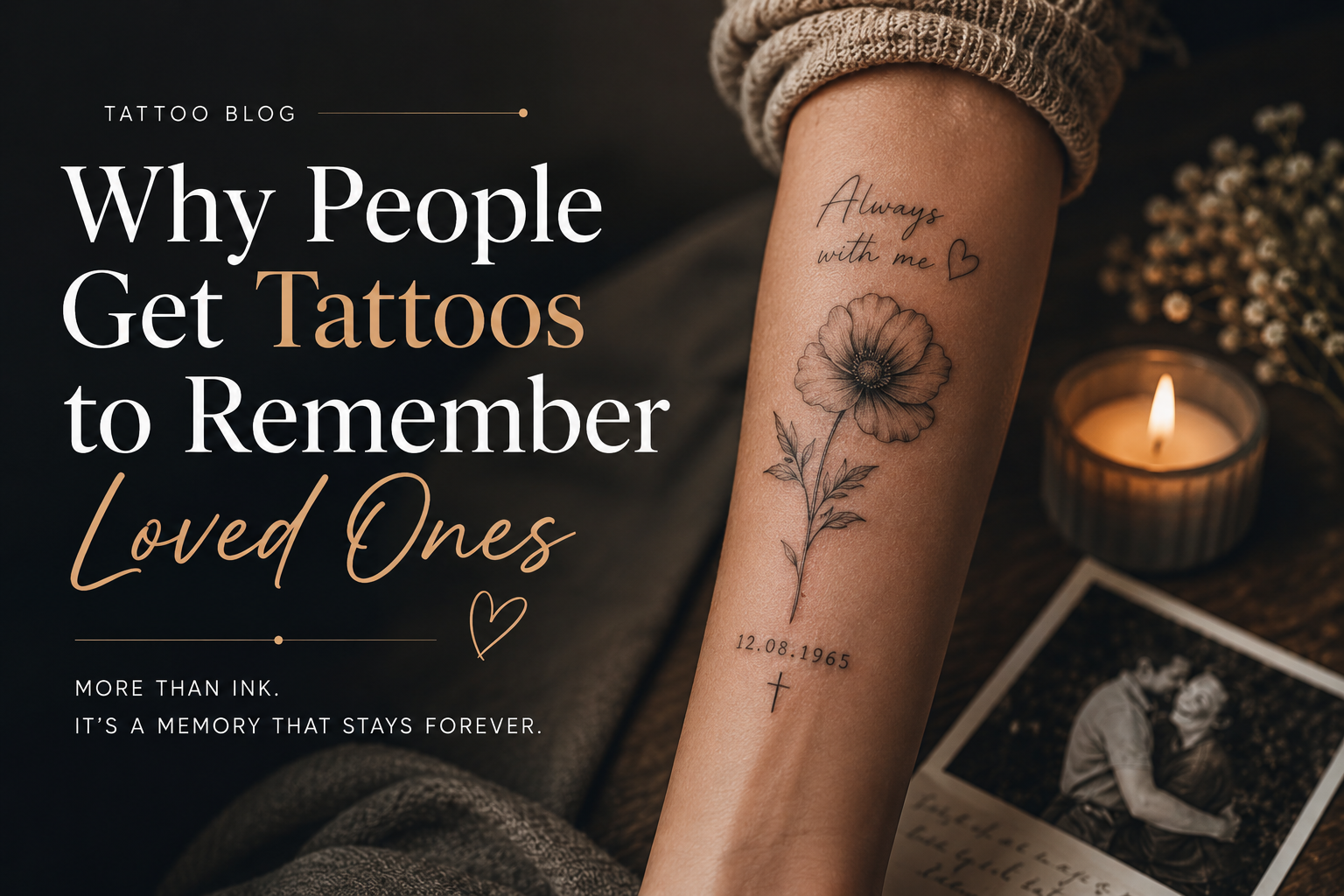
A tattoo can be a piece of art, a form of self-expression, or simply something someone has always wanted to wear on their skin. But for many people, a tattoo carries a much deeper meaning. It can represent a person they love, a memory they never want to lose, or a chapter of life that changed them forever.
This is especially true when someone chooses a tattoo to remember a loved one.
Memorial tattoos are deeply personal. They may be created after the loss of a parent, grandparent, partner, sibling, child, friend, or another important person. Sometimes, however, they are not connected to loss at all. A person may get a tattoo to celebrate someone who is still part of their life—a parent who supported them, a partner who changed their world, or a family member who played an important role in their journey.
Whatever the reason, the idea is similar: turning a meaningful relationship into a permanent piece of art.
A memorial or tribute tattoo does not have to follow a particular style. It can be a detailed portrait, a handwritten note, a date, a flower, an animal, a favorite object, a meaningful quote, or a completely custom symbol. The most important part is not how recognizable the design is to other people. It is what the tattoo means to the person wearing it.
What Makes a Tattoo a Meaningful Tribute?
The meaning behind a tattoo often comes from the story rather than the design itself.
Two people could have the same flower tattoo, for example, but the emotional meaning behind each tattoo could be completely different. One person might choose a flower because it was their mother’s favorite. Another might choose it because it reminds them of a childhood garden.
This is why meaningful tattoos are often personal rather than trendy.
A tribute tattoo can capture something that words sometimes struggle to explain. A photograph shows what someone looked like at a particular moment. A tattoo can represent how that person made you feel, what they taught you, or what they meant to your life.
The design becomes a visual reminder of a relationship.
For some people, that reminder is comforting. For others, it is a way to celebrate a life. Some see it as a promise to carry someone’s memory forward. Others simply want something permanent that represents a person who had an important place in their story.
There is no single correct reason to get one.
Tattoos as a Way of Preserving Memories
Human memories naturally change over time.
Details that once felt incredibly clear can become less vivid. A person’s voice, a particular conversation, the small habits they had, or the exact feeling of a moment can become harder to recall as the years pass.
A tattoo cannot preserve every detail of a memory, but it can act as a physical reminder.
Looking at a particular design may bring an entire story back to mind.
A small symbol might remind someone of a childhood home. A handwritten word might bring back the sound of a loved one’s voice. A portrait might represent years of memories shared together. A date might mark the beginning of a relationship or another important milestone.
The tattoo becomes a personal trigger for remembering.
That is one reason people often choose designs that have meaning beyond their appearance.
Remembering Someone Through Their Handwriting
Handwriting tattoos are particularly meaningful because handwriting is unique.
A person may choose to tattoo a signature, a short message, a name, or a few words written by someone they love. Instead of using a standard font, the tattoo preserves the individual’s actual handwriting.
This can make the design feel incredibly personal.
A simple handwritten word may not mean anything to a stranger looking at it. To the person wearing it, however, it can represent a voice, a personality, and a relationship.
Sometimes the most powerful designs are the simplest ones.
A handwritten “Love you,” a signature, a nickname, or a few words from an old note can become a subtle tribute that carries a great deal of emotional meaning.
Portrait Tattoos: Keeping a Face Close
Portrait tattoos are another popular choice for people who want to honor someone important.
A realistic portrait can capture recognizable facial features and create a permanent visual tribute. Because portraits require precision, choosing an experienced tattoo artist is particularly important.
Small differences in facial proportions can significantly change the appearance of a portrait. This makes reference-image quality, tattooing technique, skin placement, and artistic experience important considerations.
A good portrait tattoo is not simply about copying a photograph onto skin.
The artist has to understand how the image will translate into tattoo form. Skin is different from paper or a digital screen, and tattoo ink changes as it settles and ages. Details must therefore be planned carefully.
People considering portrait tattoos should discuss the reference image, size, placement, style, and expected level of detail with their artist before beginning the session.
Symbolic Tattoos Can Be Just as Powerful
Not everyone wants a portrait or name.
In fact, some people prefer a design that only they fully understand.
A symbolic tattoo might represent a loved one’s favorite flower, hobby, profession, animal, place, song, or personal object.
For example, someone might choose:
- A favorite flower
- A bird representing freedom
- A mountain representing strength
- A star representing guidance
- A musical symbol connected to a shared memory
- A meaningful date
- A favorite object
- A meaningful location
- A small illustration
- A symbol from a shared experience
The advantage of symbolic tattoos is that they can be subtle.
Someone may look at the tattoo and see a simple design. The person wearing it sees a complete story.
Why Small Memorial Tattoos Are So Popular
A tribute tattoo does not have to cover a large part of the body.
Many people choose small designs because they want something discreet and personal.
A small tattoo can be placed on the wrist, forearm, shoulder, ankle, chest, upper arm, or another meaningful location depending on the design and the individual’s preference.
Minimal tattoos can also be easier to incorporate into everyday life. Someone may want a tribute that feels private rather than immediately noticeable.
The size of the tattoo does not determine the importance of the memory.
A tiny symbol can represent decades of love.
Choosing a Meaningful Tattoo Placement
Placement is another personal decision.
Some people choose a location that is easily visible because they want the tattoo to serve as a frequent reminder. Others choose a more private location because they want the tattoo to remain personal.
A person might select a location based on:
- Visibility
- Personal symbolism
- Tattoo size
- Pain tolerance
- Professional considerations
- Future tattoo plans
- The shape of the design
- How the design fits the body
There is no universal “best” placement.
The right placement is the one that makes sense to the person getting the tattoo.
Someone may place a tribute close to their heart because of the emotional symbolism. Another person might choose their arm because they want to see the design every day.
The meaning comes from the individual.
Tattoos Can Celebrate People Who Are Still Here
Memorial tattoos are often associated with grief, but tribute tattoos are not limited to remembering people who have passed away.
People also get tattoos to honor living loved ones.
A person might tattoo their parents’ names as a tribute to everything their family has done for them. Someone might get a matching tattoo with a sibling. A couple might choose a design that represents their relationship. A child might create a tattoo celebrating a grandparent.
In these situations, the tattoo becomes a celebration rather than a memorial.
It can represent gratitude, connection, loyalty, family, friendship, or love.
This broader meaning is important because tattoos can represent relationships at every stage of life.
The Emotional Side of Getting a Memorial Tattoo
Getting a tattoo connected to someone you love can be an emotional experience.
The consultation itself may involve sharing stories, looking through photographs, discussing memories, and deciding which part of a relationship should become part of the design.
For someone who is grieving, this process may bring up strong emotions.
That is completely understandable.
There is no need to rush into a memorial tattoo simply because an important event has happened. People process emotions differently, and everyone has their own timeline.
Some people know immediately what they want. Others may need months or years before they feel ready.
There is no deadline for remembering someone.
A meaningful tattoo should be something the person genuinely wants, rather than something they feel pressured to do.
Should You Wait Before Getting a Memorial Tattoo?
There is no universal waiting period for a memorial tattoo.
Some people feel certain about their design immediately. Others prefer to wait until their emotions have settled and they have had time to think.
Both approaches can be valid.
The important thing is to make the decision for yourself.
Before booking an appointment, consider whether you are comfortable with the design, the placement, the size, and the idea of carrying it permanently.
Ask yourself:
Would I still want this design years from now?
If the answer is yes, that confidence can make the experience more meaningful.
If you are uncertain, there is nothing wrong with taking more time.
You can collect photographs, write down ideas, save sketches, or discuss possibilities with a professional tattoo artist before making a final decision.
Turning a Photograph Into a Tattoo
Photographs are often the starting point for tribute tattoos.
A person may have one photograph that perfectly captures the loved one they want to remember. It might show a smile, a particular expression, or a moment that feels especially meaningful.
However, not every photograph is equally suitable for tattooing.
A tattoo artist may need to consider:
- Image resolution
- Lighting
- Facial visibility
- Contrast
- Angle
- Background details
- Tattoo size
- Skin placement
- Desired tattoo style
A professional artist can explain whether a particular reference image will work well and whether adjustments are necessary.
Sometimes combining elements from several photographs can create a stronger final concept.
Creating a Custom Tattoo Instead of Copying an Existing Design
One of the best ways to make a tribute tattoo personal is to create a custom concept.
Rather than choosing a design from a catalog or copying another person’s tattoo, you can work with an artist to develop something based on your own story.
For example, a custom tattoo might combine a loved one’s handwriting with their favorite flower and an important date.
Another design might incorporate a portrait with a subtle background element representing a shared memory.
Custom work allows the tattoo to become a visual representation of an individual relationship.
That makes it less about following a trend and more about telling a story.
The Importance of Choosing the Right Tattoo Artist
When a tattoo carries emotional significance, choosing an experienced artist matters.
Different tattoo artists specialize in different styles.
A realism specialist may be appropriate for a portrait. A fine-line artist may be better suited to a delicate symbolic design. Someone experienced in lettering may be ideal for handwriting-based work.
Before choosing an artist, look at their portfolio.
Pay attention to tattoos similar to the style you want rather than relying only on general popularity.
Look for:
- Consistent line quality
- Strong composition
- Clean details
- Good healed-work examples
- Experience with your preferred style
- Professional studio practices
- Clear communication
A consultation can also help you understand whether the artist is the right fit for your idea.
Why Consultation Matters
A good tattoo consultation is more than choosing a date and price.
It is an opportunity to explain the story behind the tattoo.
You do not have to share every personal detail if you do not want to. But telling your artist what the tattoo represents can help them understand what you are trying to achieve.
For example, saying “I want a flower tattoo” gives an artist limited information.
Saying “This was my grandmother’s favorite flower, and she had one in her garden throughout my childhood” provides much more creative context.
The artist can then help translate that story into visual elements.
The goal is not necessarily to put the entire story into the tattoo.
Sometimes one small detail is enough.
Tattoo Style Can Change the Feeling of a Tribute
The same idea can feel completely different depending on the tattoo style.
A realistic portrait can create a detailed and recognizable tribute.
Fine-line work can make a design delicate and understated.
Blackwork can give a design stronger visual impact.
Traditional tattooing can provide bold shapes and classic tattoo aesthetics.
Minimalism can reduce an emotional idea to a few carefully selected lines.
Watercolor-inspired techniques can create a softer visual impression.
There is no universally correct style for a memorial tattoo.
The best style is the one that fits both the story and the person’s personal taste.
Names and Dates: Simple but Meaningful
Names and dates are among the most straightforward tribute tattoo ideas.
A person’s name can make the connection immediately clear.
A date can represent a birthday, anniversary, wedding, important milestone, or another meaningful moment.
However, names and dates do not have to stand alone.
They can be combined with:
- Flowers
- Symbols
- Handwriting
- Portraits
- Coordinates
- Roman numerals
- Small illustrations
- Meaningful patterns
Typography also matters.
Different lettering styles can completely change the appearance of the tattoo.
Before selecting a font, consider how it fits the person’s personality and the overall design.
Tattoos That Represent Shared Experiences
Sometimes the best tribute is not a person’s name or face.
It may be something the two of you experienced together.
Maybe you traveled to a particular place. Maybe you watched the same movie every year. Maybe there was a song you both loved. Maybe you shared a hobby, a tradition, or a favorite food.
These details can inspire unique tattoos.
A small object or symbol connected to a shared experience can carry more emotional meaning than a generic memorial design.
The tattoo becomes a private reference to a story that belongs to you.
Tattoos as a Reminder of Values
People sometimes get tattoos not only to remember someone but also to remember what that person taught them.
A parent may have taught resilience.
A grandparent may have taught kindness.
A friend may have encouraged someone to take risks.
A partner may have helped someone become more confident.
A tattoo can represent those lessons.
In this way, the tattoo becomes a reminder not just of a person but of the influence they had.
A single word such as “Courage,” “Always,” or “Believe” can represent an entire relationship when it has a personal story behind it.
What If You Want a Tattoo but Don’t Want It to Look Like a Memorial Tattoo?
Not everyone wants other people to immediately recognize the meaning behind their tattoo.
Some people prefer designs that appear decorative or artistic.
That is perfectly fine.
A tribute tattoo can be disguised within a larger design or represented through an abstract symbol.
For example, a flower may represent someone without including their name. A small constellation may represent a birth date. A geometric pattern might incorporate hidden initials.
This creates a design that can remain personal while still looking like a piece of artwork.
The meaning does not have to be obvious to everyone.
Matching Tattoos for Family and Friends
Matching tattoos can also be used to honor a relationship.
Family members or close friends may choose the same design or complementary designs.
For example, two people might have different parts of a single symbol. Siblings may choose a design connected to their childhood. A group of friends may create a small tattoo representing a shared experience.
Matching tattoos can be meaningful because the design becomes a physical representation of connection.
However, it is worth remembering that tattoos are permanent.
Everyone involved should genuinely want the tattoo rather than agreeing because of pressure from the group.
Memorial Tattoos Don’t Have to Be Sad
One common misconception is that a tattoo remembering someone must be dark or sorrowful.
It doesn’t.
A tribute can celebrate someone’s personality.
If the person was funny, the tattoo might include something playful. If they loved music, it might include a musical element. If they were adventurous, it could represent travel or exploration.
The tattoo can reflect the person’s life rather than only their absence.
For many people, that makes the tattoo feel more positive.
Instead of focusing exclusively on loss, it can focus on the moments that made the relationship special.
How Tattoo Artists Help Turn Stories Into Designs
A tattoo artist’s role is not simply to transfer an image onto skin.
For custom tattoos, the artist often helps transform an idea into a design that works visually and technically.
You may arrive with a collection of photographs, notes, sketches, and ideas that do not initially fit together.
An experienced artist can help identify the strongest elements.
They may recommend changing the size, simplifying certain details, moving an element, adjusting the composition, or choosing a different placement.
This collaborative process can turn a collection of memories into a cohesive tattoo.
The Importance of Tattoo Safety and Professional Standards
Because a tattoo is created on the skin, emotional meaning should never be the only consideration.
Safety matters too.
Choose a professional tattoo studio that follows appropriate hygiene and sterilization practices. The artist should use appropriate disposable supplies and maintain a clean working environment.
Do not choose an artist solely because they offer the lowest price.
A tattoo is permanent, and poor workmanship can be difficult and expensive to correct.
When a tattoo has deep emotional significance, investing time in finding the right professional can help protect both the artwork and the experience.
Taking Care of Your New Tribute Tattoo
Aftercare is an important part of the tattoo process.
Your artist should provide specific instructions based on the technique, placement, and products used.
Generally, you should follow your artist’s aftercare instructions carefully and avoid unnecessarily touching the tattoo with unclean hands.
During healing, the tattoo may experience changes such as dryness, peeling, tenderness, or itching.
Do not pick or scratch the area.
If you have concerns about unusual symptoms during healing, seek appropriate medical advice rather than relying solely on online information.
Taking care of the tattoo helps protect the artwork while your skin heals.
A Tattoo Can Become Part of Your Personal Story
One interesting thing about meaningful tattoos is that their meaning can evolve.
When you first get the tattoo, it may represent a particular moment.
Years later, it can represent much more.
A tattoo remembering a parent may eventually remind someone not only of their parent but also of everything they learned from them.
A tattoo for a friend may become a reminder of an entire period of life.
A tattoo for a partner may represent years of shared experiences.
The design stays the same, but the story surrounding it can grow.
What If Your Memory Changes Over Time?
People sometimes worry that getting a permanent tattoo means they must feel exactly the same about a memory forever.
But emotions naturally change.
Remembering someone does not require feeling the same way every day.
A tattoo can exist alongside changing emotions.
A person may experience sadness, gratitude, happiness, nostalgia, or acceptance at different times.
The tattoo does not need to define the emotion.
It can simply represent the relationship.
Common Mistakes to Avoid
When planning a tribute tattoo, there are several things worth considering.
Choosing a Design Too Quickly
Strong emotions can influence decision-making. If you are unsure, give yourself time.
Copying Someone Else’s Tattoo
Another person’s tribute may be meaningful to them but not necessarily meaningful to you.
Use other tattoos for inspiration, not as a substitute for your own story.
Choosing an Artist Without Checking Their Portfolio
Every artist has strengths. Look for someone experienced in the style you want.
Using a Poor-Quality Reference Photograph
If you want a portrait, provide the best-quality image possible.
Ignoring Placement
A design that looks good on paper may need adjustments to fit the body correctly.
Focusing Only on Price
Cost matters, but quality, experience, hygiene, and professionalism should also be considered.
Trying to Include Too Many Details
Sometimes adding every memory to one tattoo makes the design confusing.
Choose the elements that matter most.
Questions to Ask Yourself Before Getting the Tattoo
Before making the appointment, take a moment to think about the tattoo from different perspectives.
Ask yourself:
What exactly am I trying to remember?
Is it the person, a particular moment, a lesson, a feeling, or a relationship?
Would I prefer something obvious or subtle?
Do you want people to immediately understand the tattoo or would you rather keep the meaning private?
Which style feels right?
Think about realism, fine line, traditional, blackwork, lettering, minimalism, or another approach.
Where should it go?
Consider visibility, size, composition, lifestyle, and personal preference.
Will I still appreciate this design years from now?
A meaningful tattoo should feel connected to you rather than simply being popular at the moment.
How to Start Designing Your Tribute Tattoo
You do not need to have everything figured out before speaking with an artist.
Start by collecting things that remind you of the person.
These might include:
- Photographs
- Handwritten notes
- Favorite objects
- Quotes
- Dates
- Flowers
- Symbols
- Places
- Songs
- Personal sketches
- Old messages
- Meaningful words
Then identify the one or two elements that feel most important.
You can take those references to your tattoo artist and discuss how they could be turned into a cohesive design.
Sometimes the final tattoo will look very different from the original idea—and that can be a good thing.
The goal is to create something that works beautifully as a tattoo while preserving the meaning behind it.
Why Personal Stories Make the Best Tattoos
Trends come and go.
A particular tattoo style may become popular for a few years and then disappear from social media feeds.
Personal stories are different.
They remain meaningful because they belong to you.
A tattoo based on a genuine memory is less likely to feel meaningless later simply because a trend has changed.
That is why custom tattoo design can be so valuable for tribute work.
The design is built around your experience rather than around what is currently popular.
The Meaning Is More Important Than the Size
A large tattoo may look impressive, but size does not determine emotional value.
A small symbol on someone’s wrist can carry more meaning than an elaborate sleeve.
A single handwritten word can represent an entire lifetime.
A tiny flower can remind someone of a childhood home.
A simple date can represent the day everything changed.
The emotional value of a tattoo comes from the story behind it.
A Permanent Reminder in a Temporary World
Life changes constantly.
People move. Relationships evolve. Places disappear. Objects get lost. Photographs can become damaged or forgotten.
A tattoo is different because it becomes part of the person carrying it.
It can serve as a physical reminder of something that mattered.
That does not mean a tattoo replaces photographs, memories, or personal belongings. Instead, it can exist alongside them as another way of remembering.
For some people, that permanence is exactly what makes the tattoo meaningful.
Final Thoughts: Carrying a Memory Forward
People get tattoos to remember loved ones for countless different reasons.
Some want to honor a person who changed their life.
Some want to preserve a handwriting sample, a photograph, or a meaningful date.
Some want a symbol that only they understand.
Some want to celebrate a relationship.
Others simply want a permanent reminder of love.
There is no single design that defines a meaningful tribute tattoo.
The best design is often the one that tells a story.
It may be bold or subtle. Large or small. Realistic or abstract. Visible or private.
What matters is that it feels authentic to the person wearing it.
A meaningful tattoo does not erase memories, replace photographs, or stop time. It simply gives a memory a physical form.
And sometimes, that small piece of ink can become a reminder carried through every new chapter of life.
Because when someone leaves a lasting mark on your life, a tattoo can become one way of carrying that mark forward.
Leave a Reply